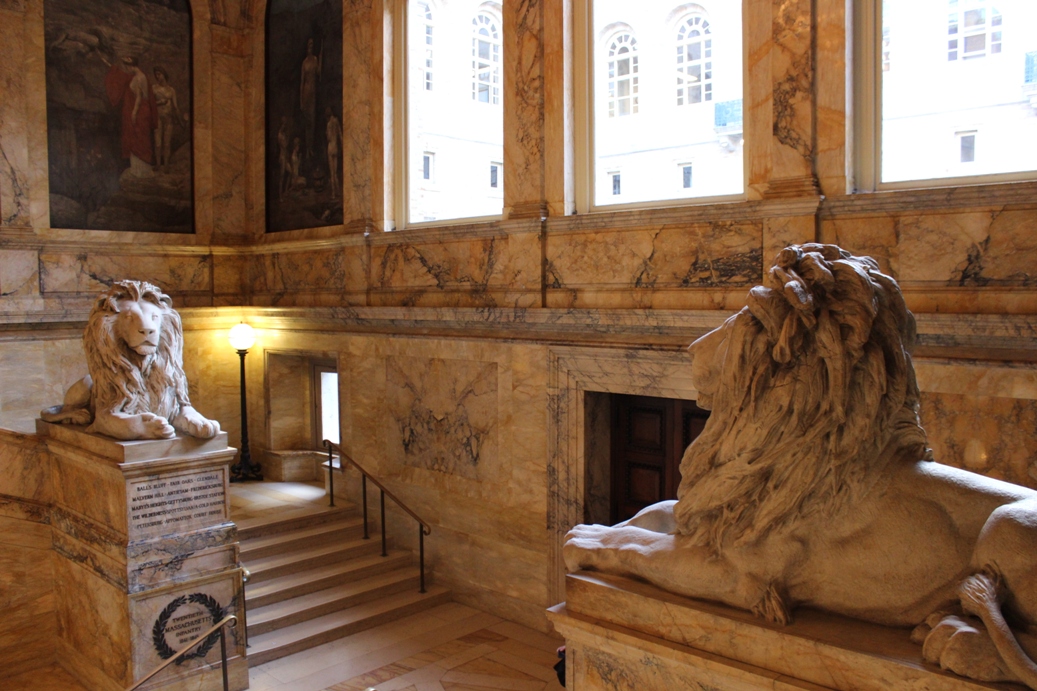
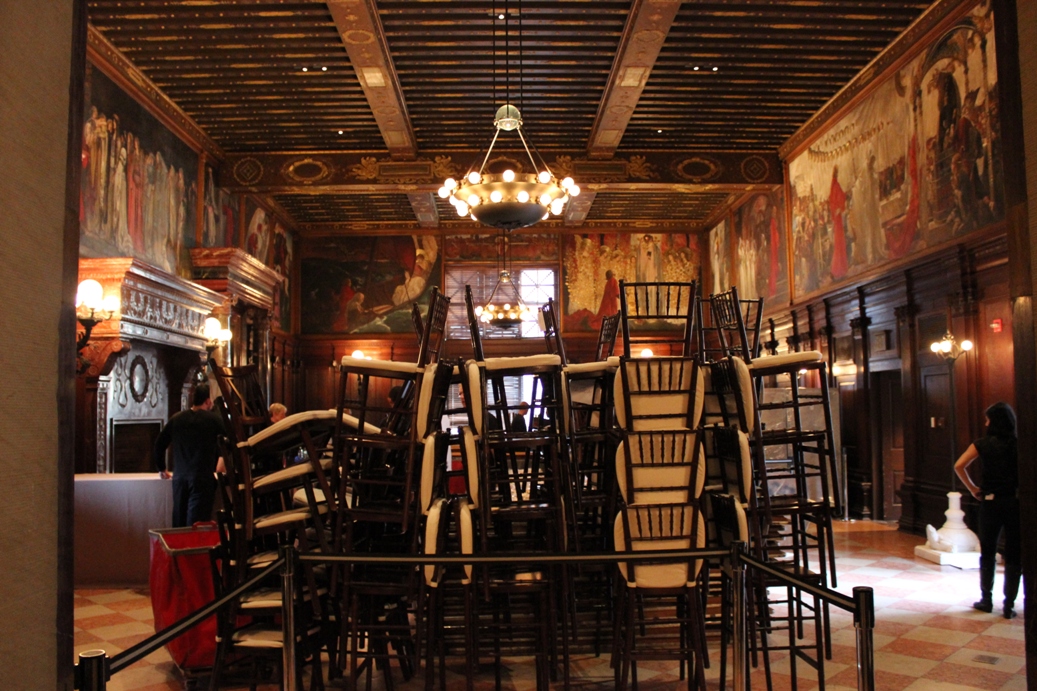
“In large cities, not only neighborhood libraries but central research libraries – the nucleus of what would become some of the greatest research collections in the world – were open to anyone with a library card. When the grand Forty-second Street headquarters of the New York Public Library opened its doors to the public for the first time on May 24, 1911, some fifty thousand New Yorkers passed through the Fifth Avenue entrance – guarded by stone lions that would soon become famous civic landmarks – to view the marvels within. The first book delivered to a reader was a Russian-language volume of philosophy, attesting to the evolution of a civic culture in which ordinary citizens were gaining access to cultural and intellectual resources previously locked away from all but the wealthiest, most privileged members of society“. [Susan Jacoby (2008), The Age of American Unreason, New York: Random House, pp. 64-65]